Loading

Sifted

Mobile App

Consumer Wellness · AI-Assisted Nutrition · Brand + Product

The Challenge

Health-conscious shoppers, people managing keto, paleo, anti-inflammatory, diabetic, or PCOS diets, are highly motivated but profoundly underserved. Nutrition labels are designed to comply, not communicate. Additive names are deliberately obscure.

Existing scanner apps either oversimplify into vague grades or overwhelm with raw data. Every tool on the market treats all users the same, ignoring that products safe for one dietary profile can be inflammatory for another.

The Solution

An AI-powered mobile app that scans any food product and instantly flags hidden sugars, inflammatory ingredients, and misleading health claims, then explains why, in plain language, personalized to the user's specific dietary profile.

Built with a custom illustration system, an AI nutrition assistant, pantry and recipe integration, and a judgment-free design language built from the ground up.

Self-directed academic project, currently in active development. The design work documented here forms the product foundation.

RoleUX Designer & Founder
ScopeEnd-to-end
TimelineOngoing
Year2025
TeamWith 1 Developer

Confusing food labels and lack of personalized dietary guidance make healthy eating unnecessarily difficult.

The Problem

Health-conscious shoppers have the knowledge. But they lack a tool that helps them act on it.

The average health-conscious shopper is not uninformed. They understand the risks of added sugar. What they lack is a tool that helps them act on that knowledge at the moment it matters: standing in a grocery aisle, reading a label full of chemical names they cannot interpret, or preparing a meal without advance planning.

Nutrition labels are designed to comply, not to communicate. Additives hide behind dozens of aliases. The apps that exist either oversimplify into vague letter grades or overwhelm with raw data.

The gap: actionable clarity at the point of decision, personalized to each user's specific dietary restrictions.
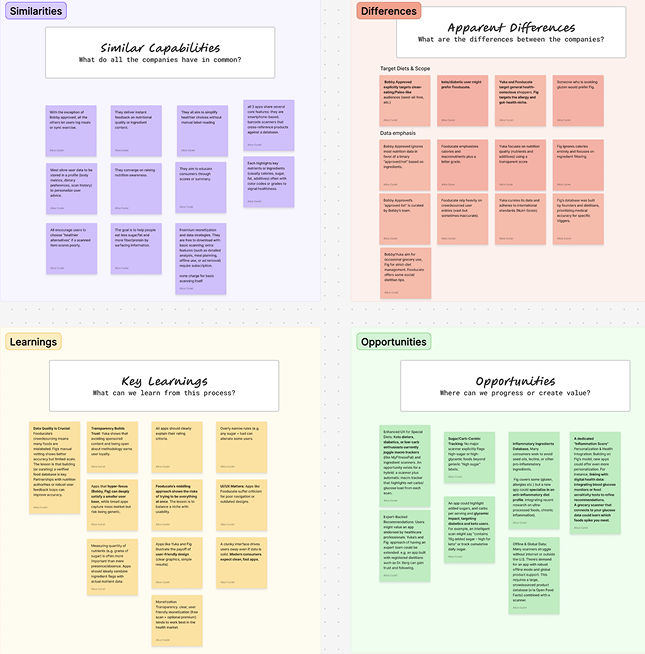
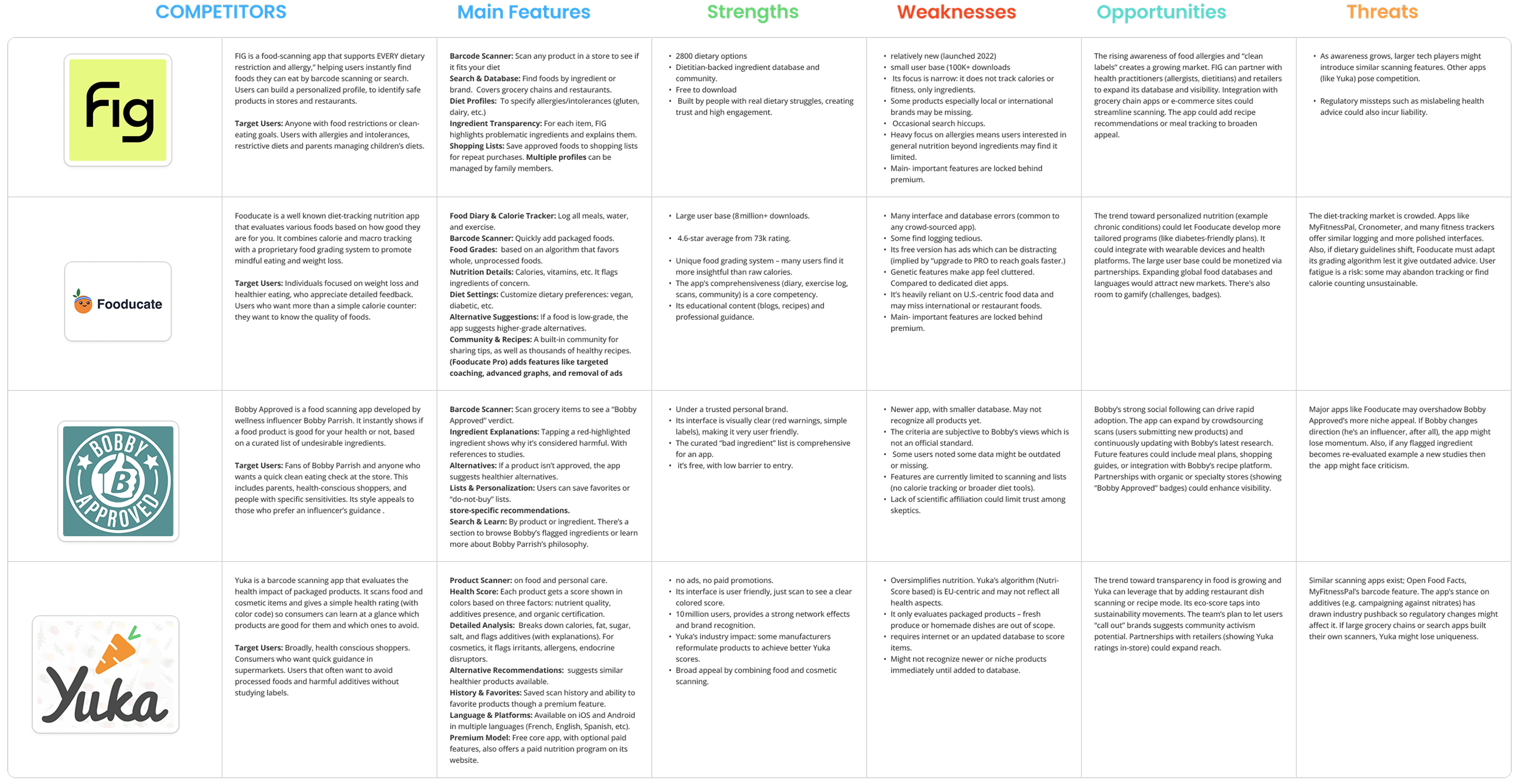
Competitive audit of existing nutrition apps
Research

5 qualitative interviews. 3 actionable findings.

Research also included

AI-assisted research supplemented the interviews: competitor scans, evidence-based nutrition and ingredient research to ground the sugar-alias and additive callouts in accurate science, and a look at how other consumer apps use AI to personalize recommendations, informing how Sifted's own AI nutrition assistant tailors guidance to each user's dietary profile.

100%of participants unaware of hidden sugar aliases, maltodextrin, tapioca starch, none recognized as sugar.
4 of 5felt actively misled by food packaging. "Organic," "natural," "low fat" claims obscured high sugar or inflammatory content.
3+ toolsEvery participant was using multiple tools simultaneously, none connected. The fragmentation was the problem.

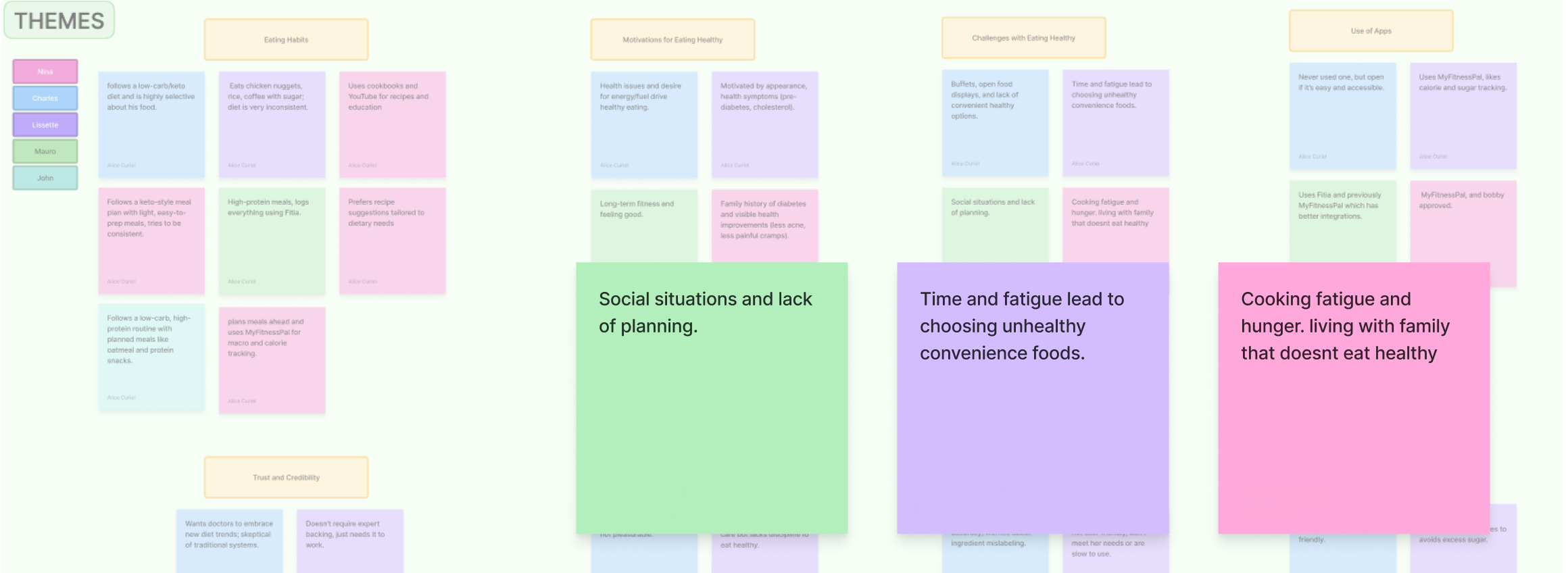
Themes that emerged

Social situations and lack of planning.
Time and fatigue lead to choosing unhealthy convenience foods.
Cooking fatigue and hunger, living with family members who do not share the same dietary goals.

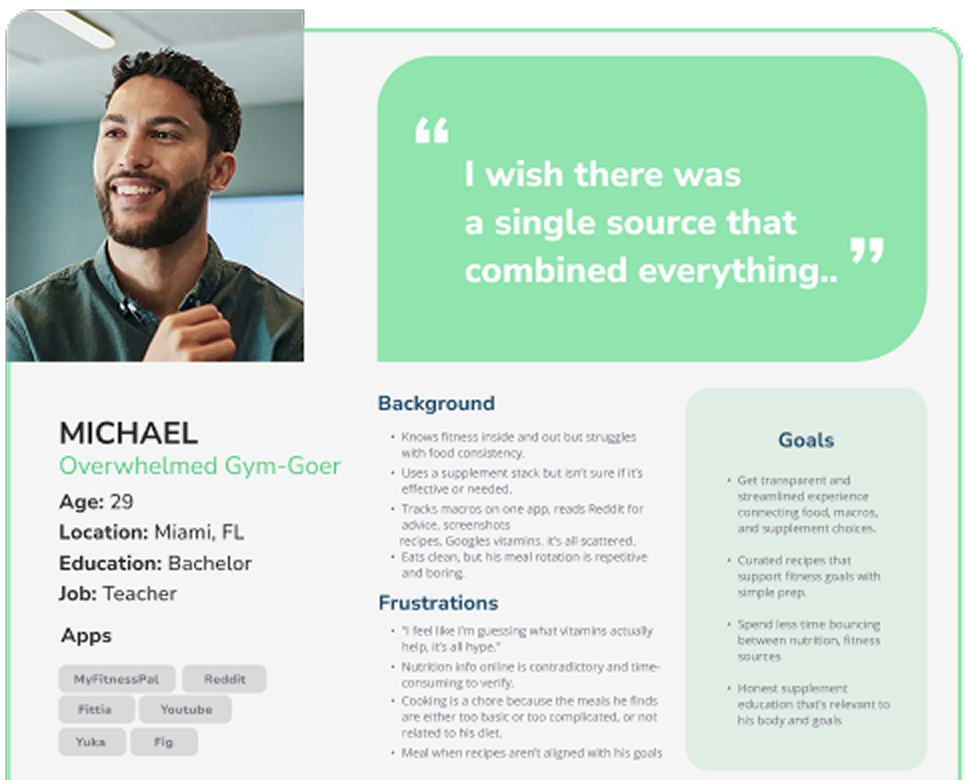
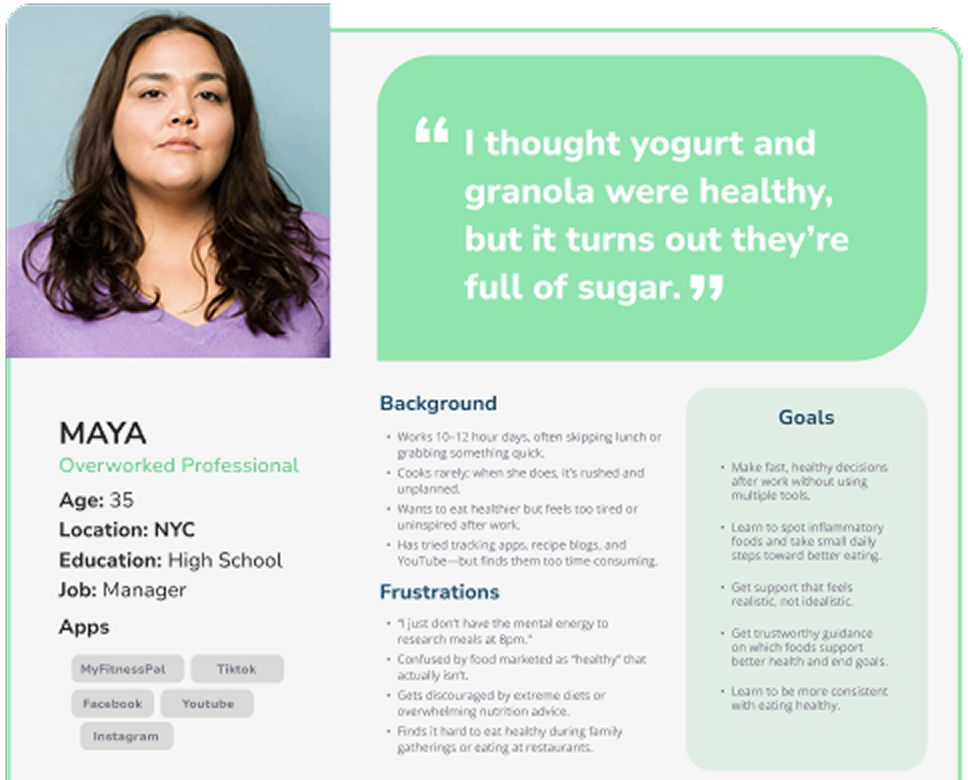
Who I designed for

Michael, Overwhelmed Gym-Goer persona Maya, Overworked Professional persona
Strategic Framework

Challenging industry defaults.

Industry DefaultSifted's Approach
Hide sugar complexity behind scoresSurface hidden sugar aliases automatically
Paywall ingredient detailsFree and instant access to all ingredient information
Grade food genericallyPersonalize feedback to each user's dietary profile
Let "healthy" claims standFlag misleading labels explicitly

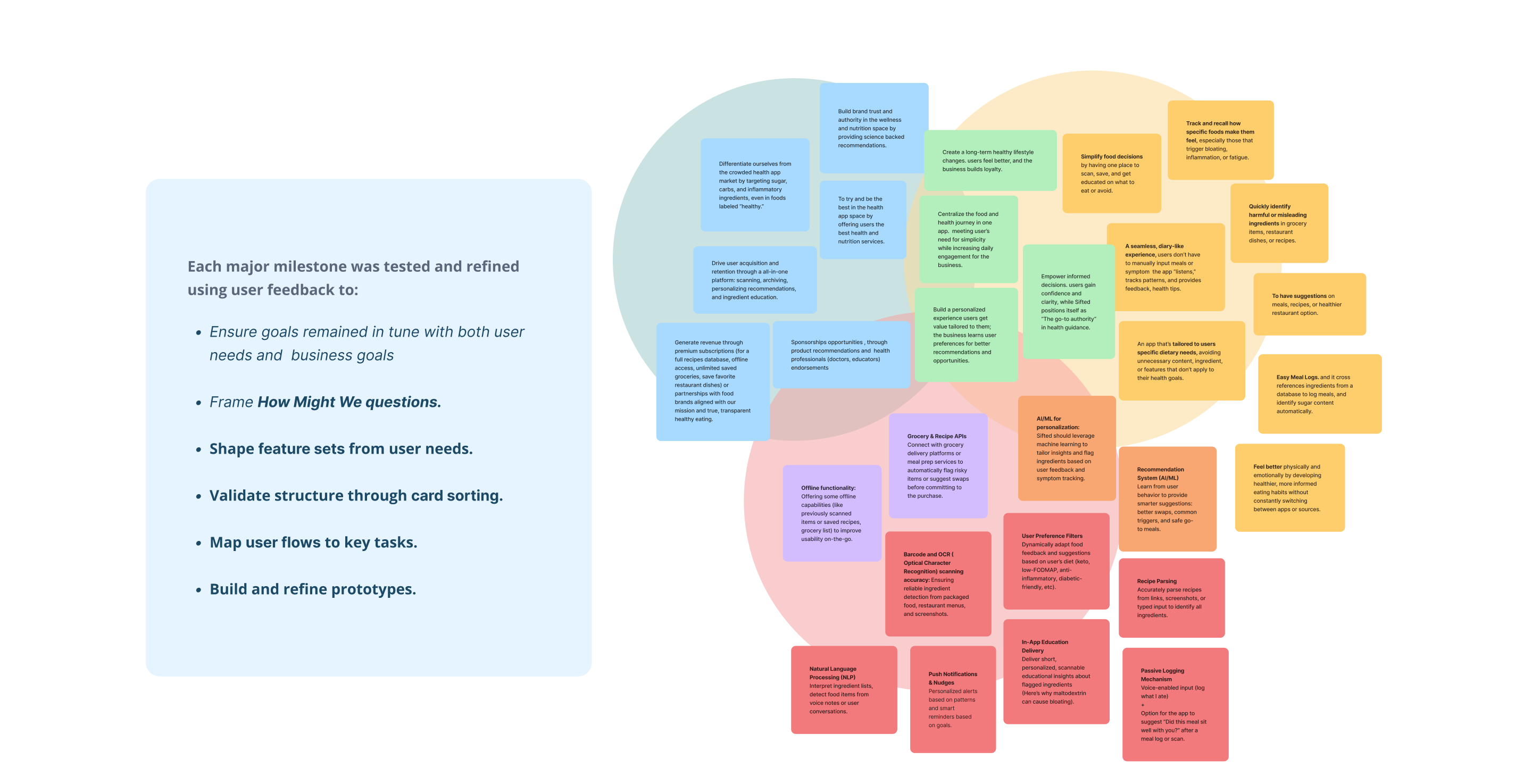
How each milestone was validated

Ensured goals remained in tune with both user needs and business goals before scoping features.

Translated research findings directly into a prioritized feature list rather than an unfocused feature backlog.

Confirmed the information architecture matched how users grouped nutrition concepts in practice.

Scan → decode → decide became the core loop every other flow was built around.

Iterated from low- to high-fidelity, testing each layer before adding visual polish.

Must-Have Features

What the research told us to prioritize

Account Creation

Registration, sign-in, and onboarding questionnaires so users get a personalized profile with access to saved searches and recipes.

Barcode & OCR Scanner

A quick tool to detect unwanted ingredients from barcodes, ingredient lists, menus, or images, parsing recipes from links, screenshots, or typed input.

Recommendation System

Learns from user behavior and profile settings to suggest smarter swaps, common triggers, and reliable meal options aligned with their profile.

Misleading Health Claims Detector

Flags hidden sugars, high-carbs, seed oils, and inflammatory additives, and explains why, identifying deceptive labels like "low fat" or "organic."

Designing the AI Experience

Context-first. Ingredient-level. Gracefully uncertain.

The AI feature was the most complex design challenge, and the most relevant to where consumer wellness is heading.

Context-first responses

The AI leads with information relevant to the user's specific dietary profile before providing general information.

Ingredient-level explanations

Rather than "this product scored a C," the AI explains why a specific ingredient is a flag for this specific user's context.

Graceful uncertainty

The interface surfaces AI uncertainty explicitly rather than presenting low-confidence responses as authoritative.

Visual Design & Brand

Building a Brand That Reflects the Mission

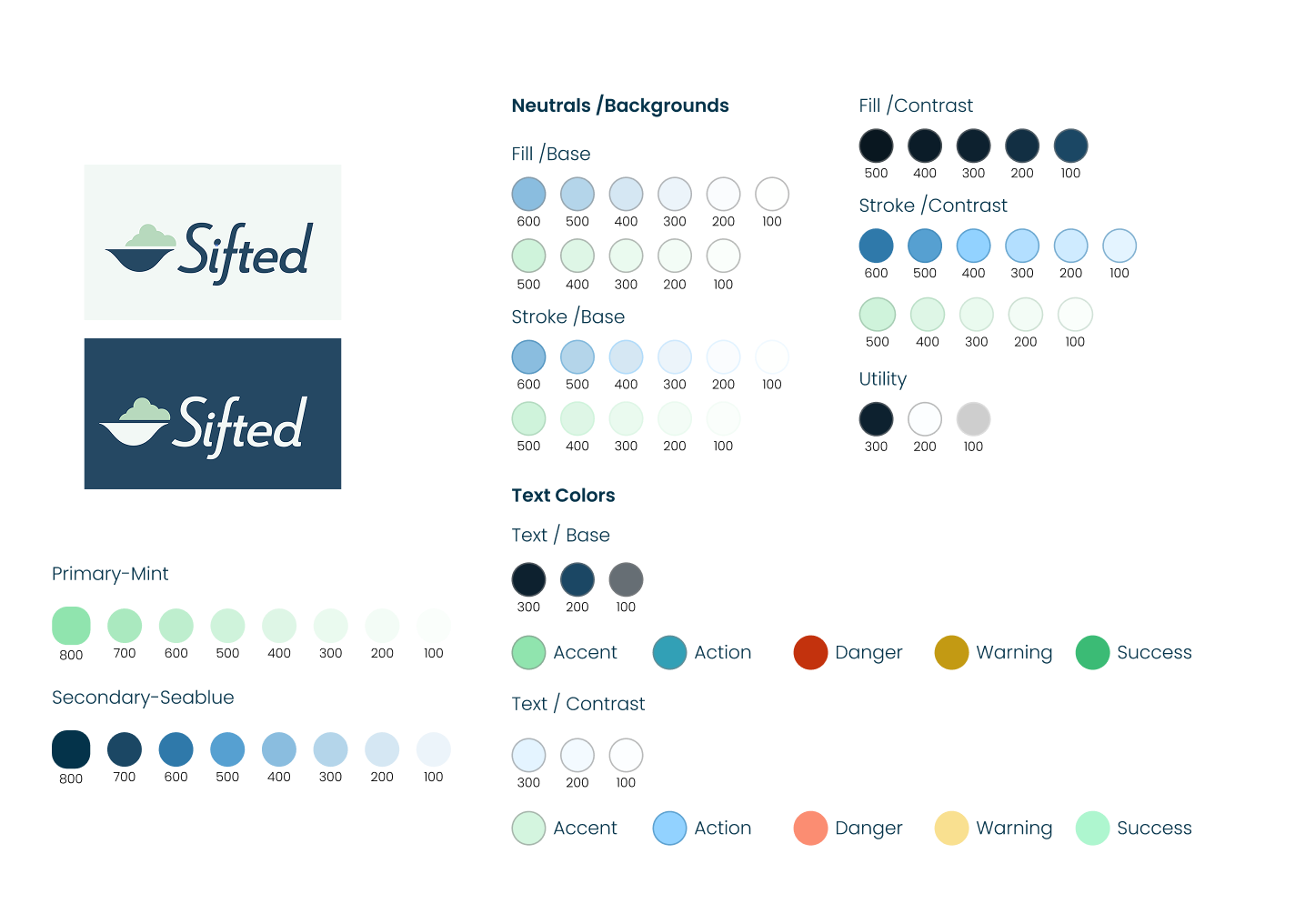
Primary mint green for freshness without sterility. Deep navy for authority. Accent warning colors used exclusively for trust signals and critical flags, a consistent visual language that trains users to pay attention when it appears.

The bowl with a sifted powder cloud subtly suggests the act of sifting ingredients, mirroring the app's core function of scanning and clarifying foods.

Mission statement: "Our goal is to bring clarity to food and make wellness a sustainable, daily habit."

Sifted color and typography system
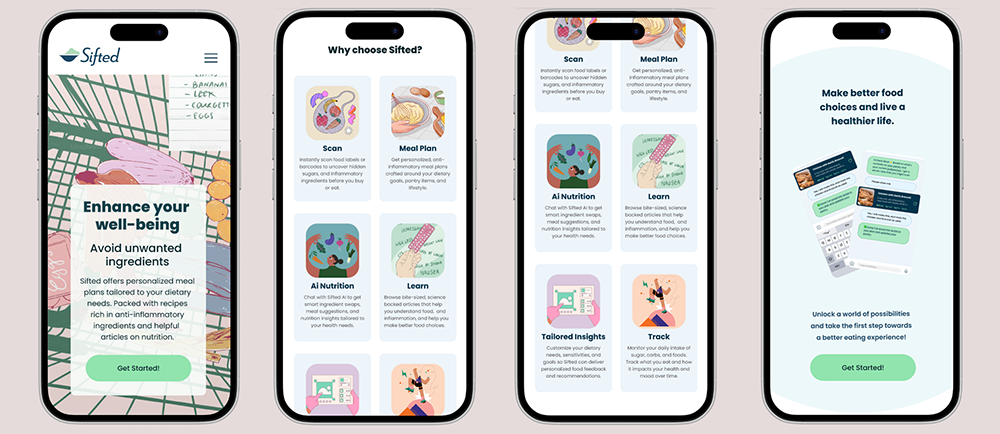
Sifted outcome mockups
Usability Testing

Failures that shaped the final product

Testing surfaced five issues. Two were critical enough to redesign immediately.

5Participants
5Issues Found
100%Task Completion Rate

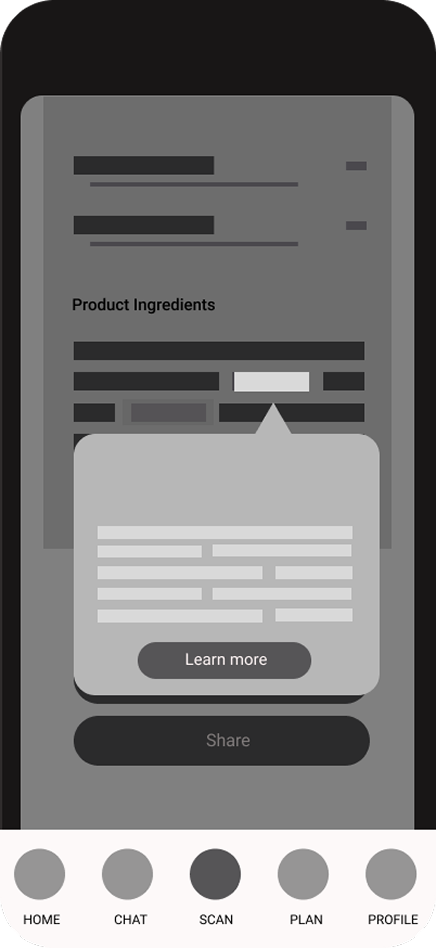
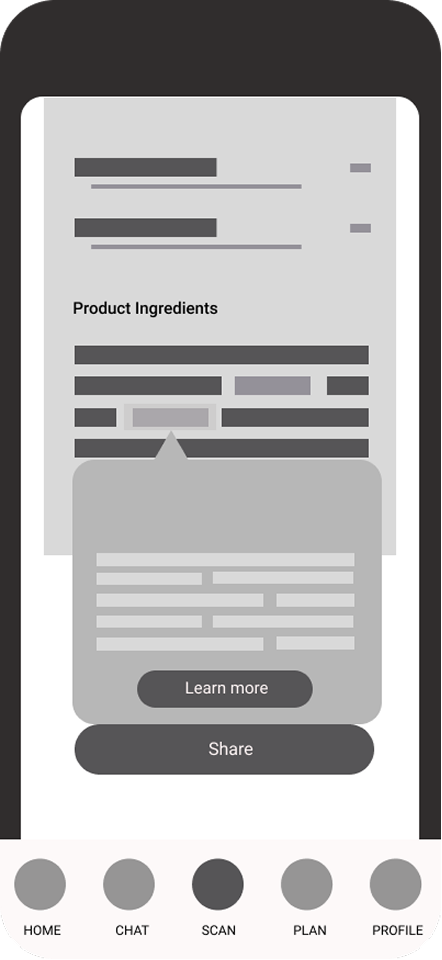
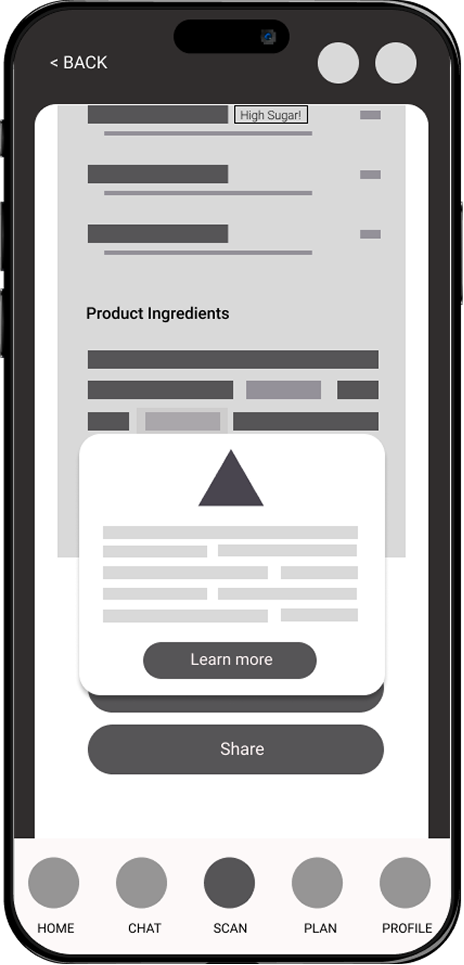
The ingredient alert blended into the page; users missed it entirely, and those who noticed did not realize it was clickable. Resolution: increased visual weight, larger size, and a "Learn why" button that makes the alert explicitly actionable.

Displaying the full ingredient list upfront overwhelmed users and buried the information they needed most. Resolution: progressive disclosure, flagged ingredients surface first by default, with a "View All" option for full transparency.

Users could only initiate a scan from the home screen, and the navigation icon was not intuitive at first glance. Resolution: added a "Scan Another Item" CTA on results, and made the navigation scan button more visually prominent.

Onboarding copy was heavy and some users skipped it; a "None / Others" option was missing, leaving edge cases unaccounted for. Resolution: simplified language and added the missing option, reducing first-use drop-off.

Enhancements such as clickable information icons were documented for future iteration and deferred intentionally, since they had minimal impact on core tasks relative to the effort required.

Core features, shipped

Scan

Instantly scan labels or barcodes to uncover hidden sugars or inflammatory ingredients before you buy or eat.

Meal Plan

Personalized, anti-inflammatory meal plans crafted around dietary goals, pantry items, and lifestyle.

AI Nutrition

Chat with Sifted AI for smart ingredient swaps, meal suggestions, and tailored nutrition insights.

Tailored Insights

Customize dietary needs, sensitivities, and goals for personalized food feedback and recommendations.

Track

Monitor daily sugar, carb, and food intake, and how it impacts health and mood over time.

Learn

Bite-sized, science-backed articles that help you understand food and make better choices.

Team & My Contribution
Thalia Brito Developer
Me, UX Designer & Founder product vision, research, UX, and brand
What This Product Is Built to Prove

Clarity builds trust. Trust changes behavior. Behavior improves health.

The people most motivated to eat well are the least supported by the tools that exist. Sifted aims to close that gap with ingredient-level transparency, judgment-free language, AI personalization that adapts to user needs and their pantry, as well as visual design that positions the experience as supportive guidance rather than judgment.

Next case file

TiriVelo